9 Passenger Jet
-2026-01-29%20at%2020.22.07.png)
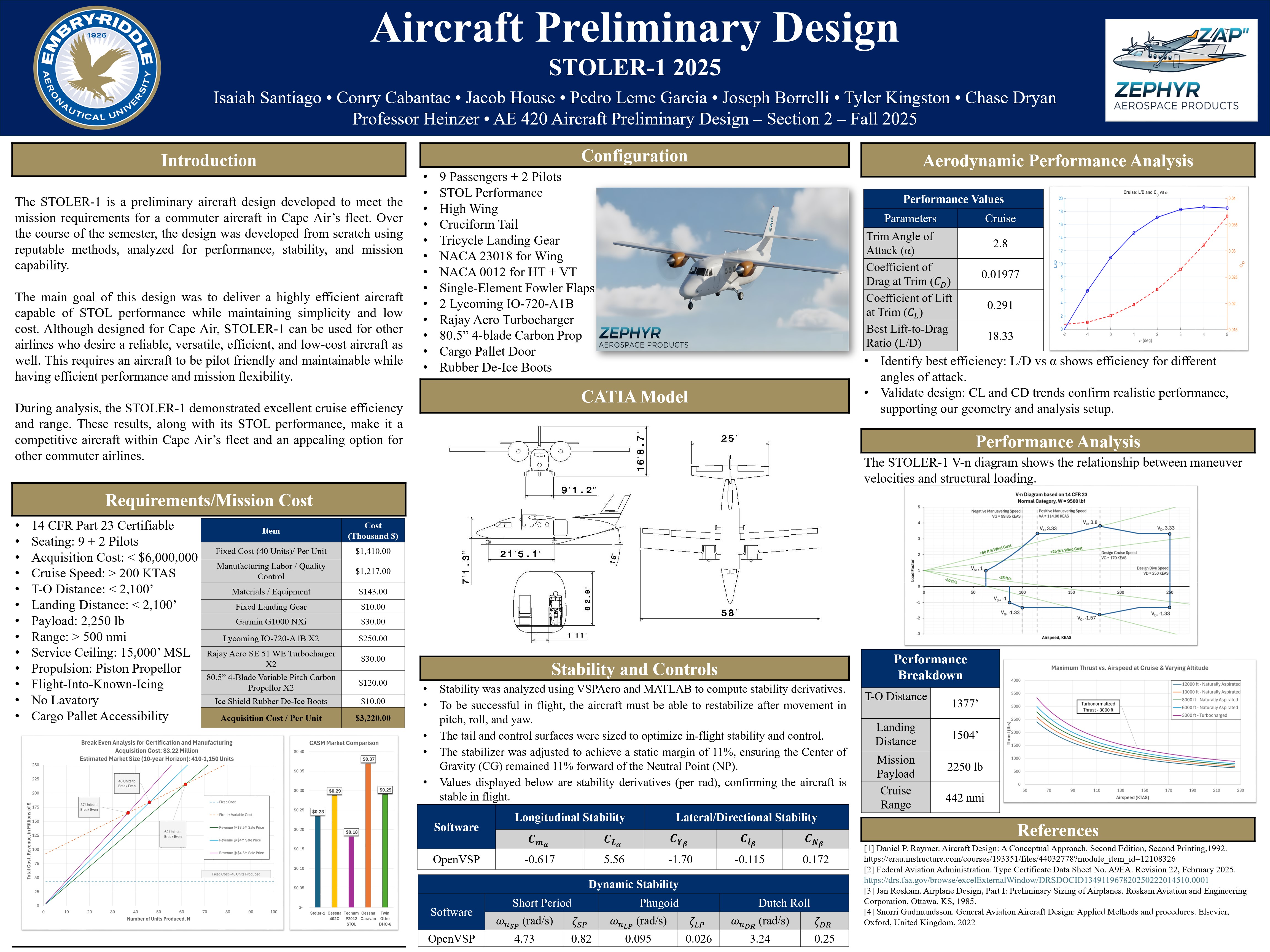
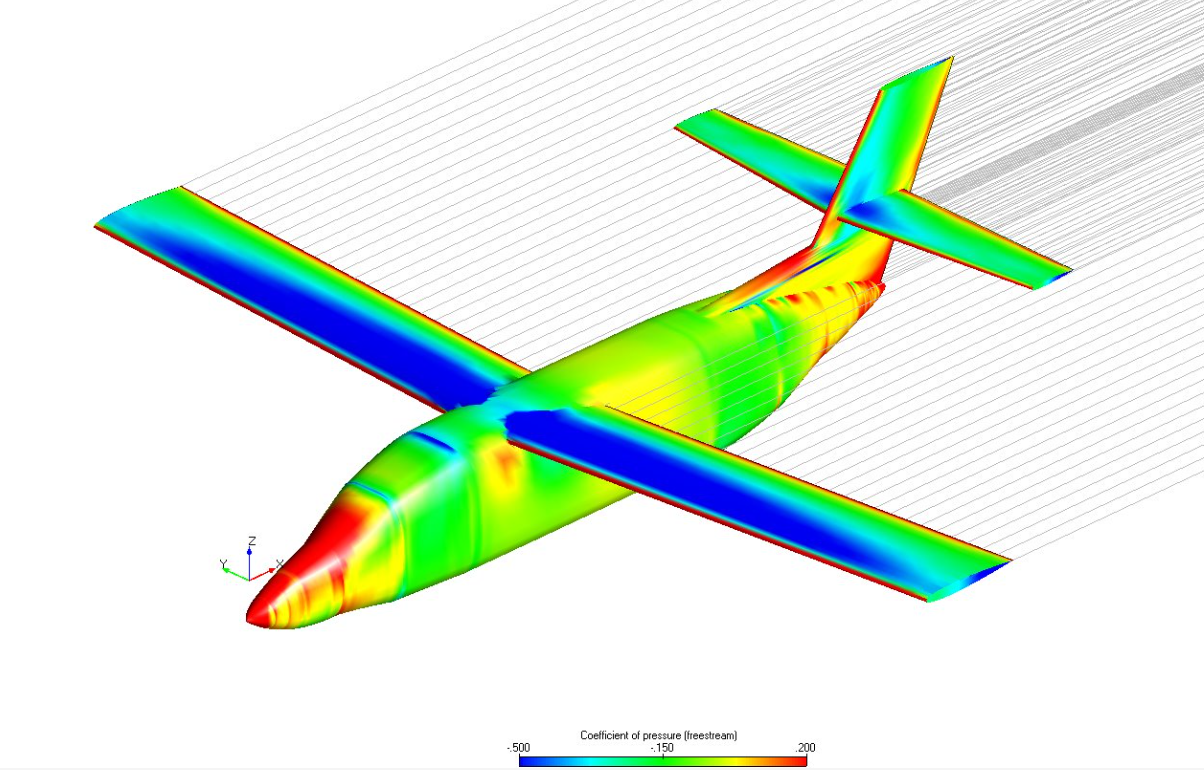
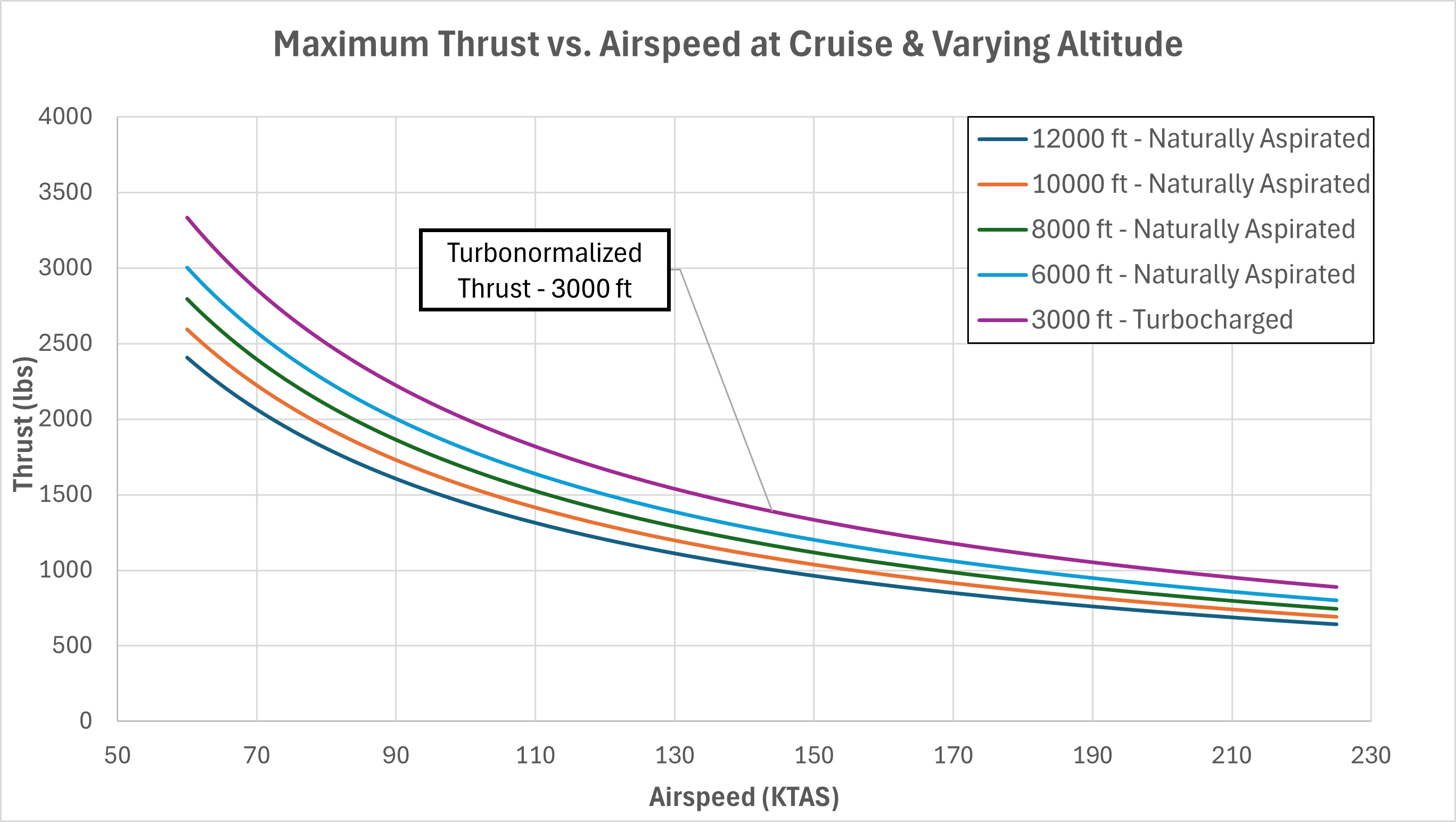
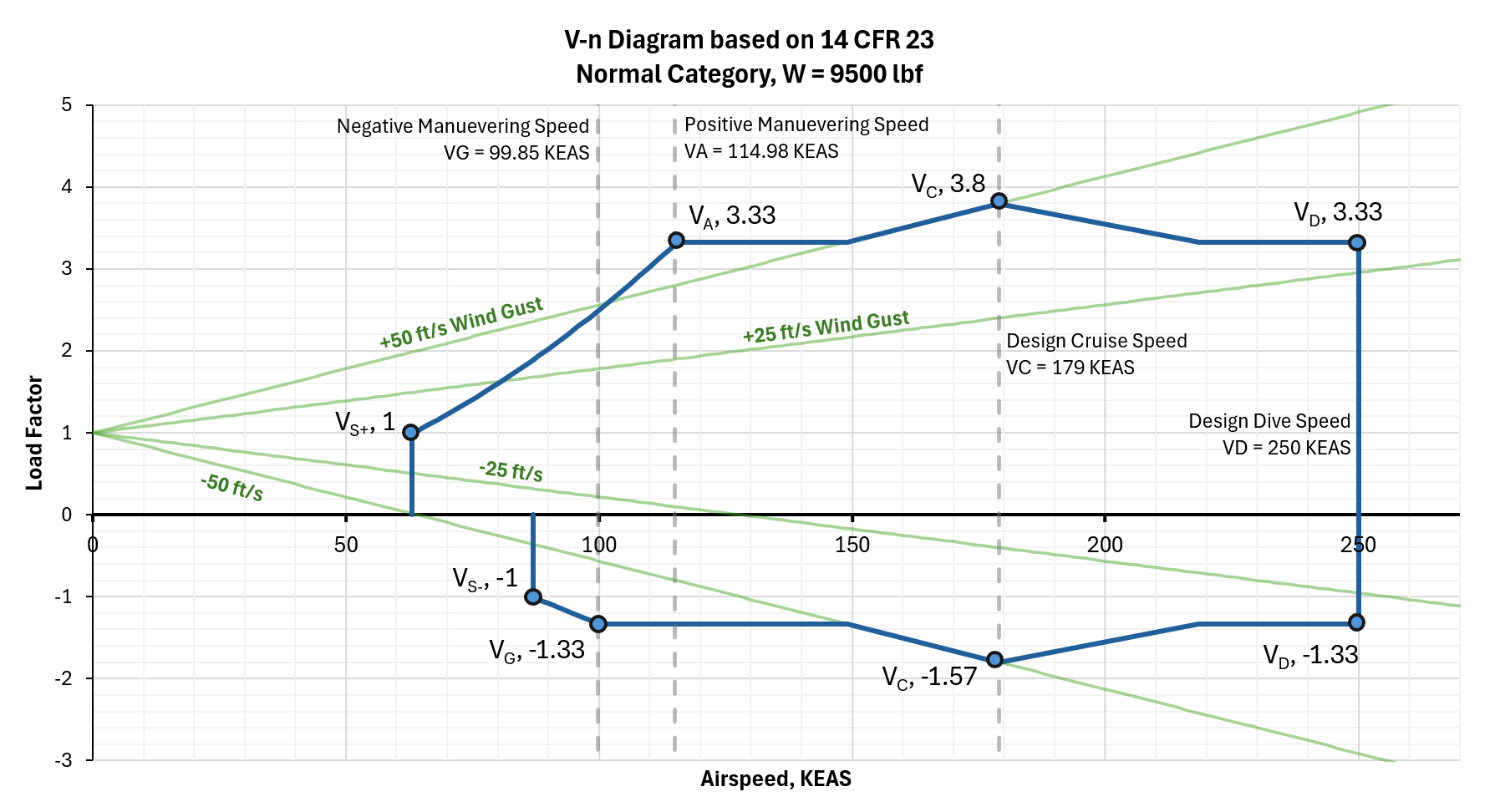
STOLER-1 is a Part 23–focused commuter aircraft concept developed to meet the needs of short-runway regional operators. The project’s goal was to create a practical airplane that can operate from constrained airfields while still delivering strong cruise efficiency, useful payload capability, and low ownership cost. The aircraft is sized for 9 passengers plus 2 pilots and is aimed at Cape Air–style missions where frequent cycles, reliability, and easy maintainability matter as much as performance. The final configuration is a high-wing aircraft with a cruciform tail and tricycle landing gear, chosen for passenger access, stability, and operational practicality. STOL capability is supported through high-lift devices (single-element Fowler flaps) and a wing/tail airfoil selection intended to balance low-speed lift with efficient cruise performance. The propulsion system uses twin piston engines (Lycoming IO-720-A1B) paired with turbocharging to improve performance at altitude and maintain mission flexibility across varying conditions. Operational features like cargo pallet access and de-ice boots were included to reflect real commuter-airline needs. Performance and handling were evaluated using a workflow combining CATIA for geometry definition, OpenVSP for aerodynamic and stability modeling, and MATLAB for derivative processing and mission performance calculations. Aerodynamic results showed realistic lift and drag behavior with a clear best-efficiency point, while stability analysis confirmed the aircraft can be trimmed and returns predictably after disturbances. The design met the short-field intent with preliminary takeoff and landing distances on the order of ~1,400–1,500 ft and demonstrated competitive cruise efficiency. A V-n diagram was also produced to verify maneuver and structural speed limits consistent with certification-driven design practices. Overall, STOLER-1 demonstrates a balanced commuter aircraft concept that prioritizes short-field capability without giving up the efficiency, controllability, and real-world operability required for regional airline service.